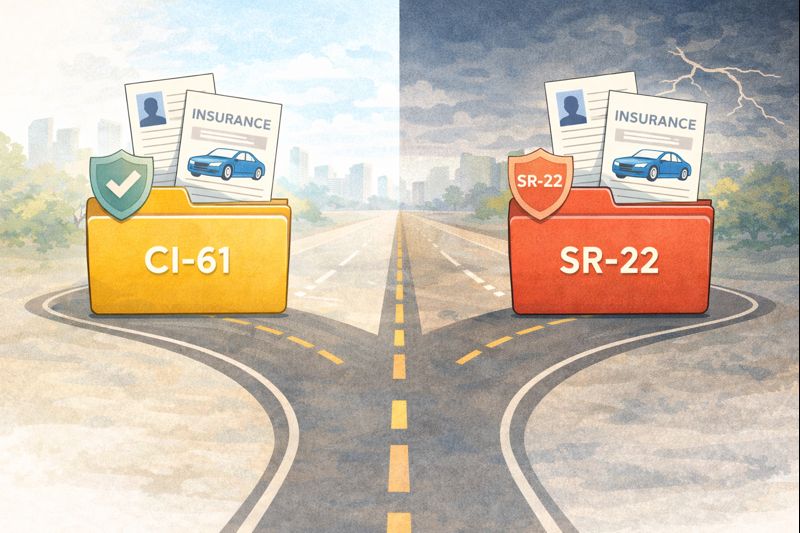
Introduction: Why Drivers Confuse SR-22 and SR-22
Drivers facing license suspension, reinstatement requirements, or court-ordered insurance monitoring often encounter unfamiliar terms such as SR-22 and SR-22. Because both are associated with high-risk driving situations and state compliance rules, many drivers assume they are interchangeable.
They are not.
Understanding the SR-22 insurance vs SR-22 differences is critical. Choosing or filing the wrong form can delay reinstatement, cause license re-suspension, or lead to additional penalties. This article provides a clear, authoritative comparison to help drivers determine which requirement applies to their situation.
What Is SR-22 Insurance?
SR-22 insurance is a state-mandated insurance certification used to confirm that a driver maintains continuous financial responsibility after specific violations or administrative actions.
Key characteristics of SR-22:
-
Required after certain insurance-related violations
-
Often imposed following license suspension
-
Filed by the insurance company with the DMV
-
Actively monitored for policy lapses
-
Tied to state financial responsibility enforcement
SR-22 is primarily an administrative compliance mechanism, not a type of insurance coverage.
What Is SR-22 Insurance?
SR-22 is also a form of insurance certification, but it serves a broader and more commonly recognized function across the United States.
Key characteristics of SR-22:
-
Required for high-risk drivers in many states
-
Commonly associated with DUI, reckless driving, or repeated violations
-
Filed by the insurer with the state
-
Confirms minimum liability coverage
-
Often required for longer compliance periods
Like SR-22, SR-22 does not provide coverage itself; it verifies compliance.
Core Differences Between SR-22 and SR-22
While both SR-22 and SR-22 confirm financial responsibility, they differ significantly in purpose, usage, and enforcement context.
1. Purpose and Triggering Events
SR-22 Insurance
-
Triggered primarily by insurance-related non-compliance
-
Common after license suspension for lack of insurance
-
Often administrative rather than criminal
SR-22
-
Triggered by serious driving offenses
-
Common after DUI, reckless driving, or repeat violations
-
Often tied to court rulings or criminal convictions
2. State Usage and Availability
SR-22
-
Used in specific states or administrative programs
-
Less widely known and more narrowly applied
SR-22
-
Recognized nationwide
-
Used by most states as a standard high-risk filing
Drivers must comply with the form explicitly required by their state—substitution is not allowed.
3. Filing Authority and Oversight
SR-22
-
Typically mandated by the DMV
-
May also involve court oversight in some cases
-
Focuses on insurance continuity enforcement
SR-22
-
Required by both courts and DMVs
-
Often part of sentencing or probation conditions
-
May involve multiple compliance agencies
4. Compliance Duration
SR-22
-
Often shorter compliance periods
-
Duration depends heavily on state rules and violation type
-
Lapses may reset the monitoring period
SR-22
-
Frequently required for 2–3 years
-
Longer durations common for serious offenses
-
Strict restart penalties after lapses
5. Cost Differences
SR-22 Costs
-
Filing fees are usually modest
-
Premium increases vary by state
-
Costs driven mainly by insurance violation history
SR-22 Costs
-
Generally higher premiums
-
Longer compliance periods increase total cost
-
Greater insurer risk classification
Although neither form directly sets premiums, SR-22 cases often involve more severe risk profiles.
SR-22 Insurance vs SR-22: Side-by-Side Comparison
| Category | SR-22 Insurance | SR-22 |
|---|---|---|
| Primary Use | Insurance compliance | High-risk driver enforcement |
| Common Trigger | No insurance / lapse | DUI, reckless driving |
| Filing Entity | Insurer → DMV | Insurer → DMV / Court |
| Duration | State-dependent | Typically longer |
| Cost Impact | Moderate | Often higher |
| Availability | Limited states | Most states |
Which One Do You Need?
Drivers do not choose between SR-22 and SR-22. The requirement is determined by:
-
State law
-
DMV enforcement notices
-
Court orders
-
Violation type
If your notice specifies SR-22, filing SR-22 instead will not satisfy compliance—and vice versa.
Common Misconceptions That Cause Problems
Misconception 1: “SR-22 Covers All High-Risk Cases”
False. Some states require SR-22 specifically for insurance-related violations.
Misconception 2: “They Are Just Different Names for the Same Thing”
False. Filing the wrong form can invalidate compliance.
Misconception 3: “Any Insurer Can File Either”
False. Not all insurers are authorized to file SR-22.
Switching Between SR-22 and SR-22 Requirements
In rare cases, drivers may encounter both requirements at different times due to:
-
Multiple violations
-
Interstate moves
-
Escalating enforcement actions
Each requirement must be satisfied independently, according to state rules.
How Filing the Wrong Form Affects Your License
Consequences of filing the wrong certification include:
-
Rejection by the DMV
-
Delayed license reinstatement
-
Automatic re-suspension
-
Additional fees
-
Extended compliance periods
Verification before filing is essential.
Frequently Asked Questions About SR-22 vs SR-22
Can SR-22 replace SR-22?
No. Only the form required by the state is valid.
Which one is more serious?
SR-22 usually indicates more severe violations, but SR-22 is equally mandatory when required.
Can requirements change over time?
Yes. New violations can alter compliance obligations.
Conclusion: Understanding the Difference Protects Your Driving Privileges
Understanding SR-22 insurance vs SR-22 differences is not just academic—it directly affects your ability to drive legally. Filing the wrong form can undo months of compliance and result in costly setbacks.
Drivers should always follow the exact requirements listed in official DMV or court notices, work with authorized insurers, and confirm acceptance with the appropriate authority.